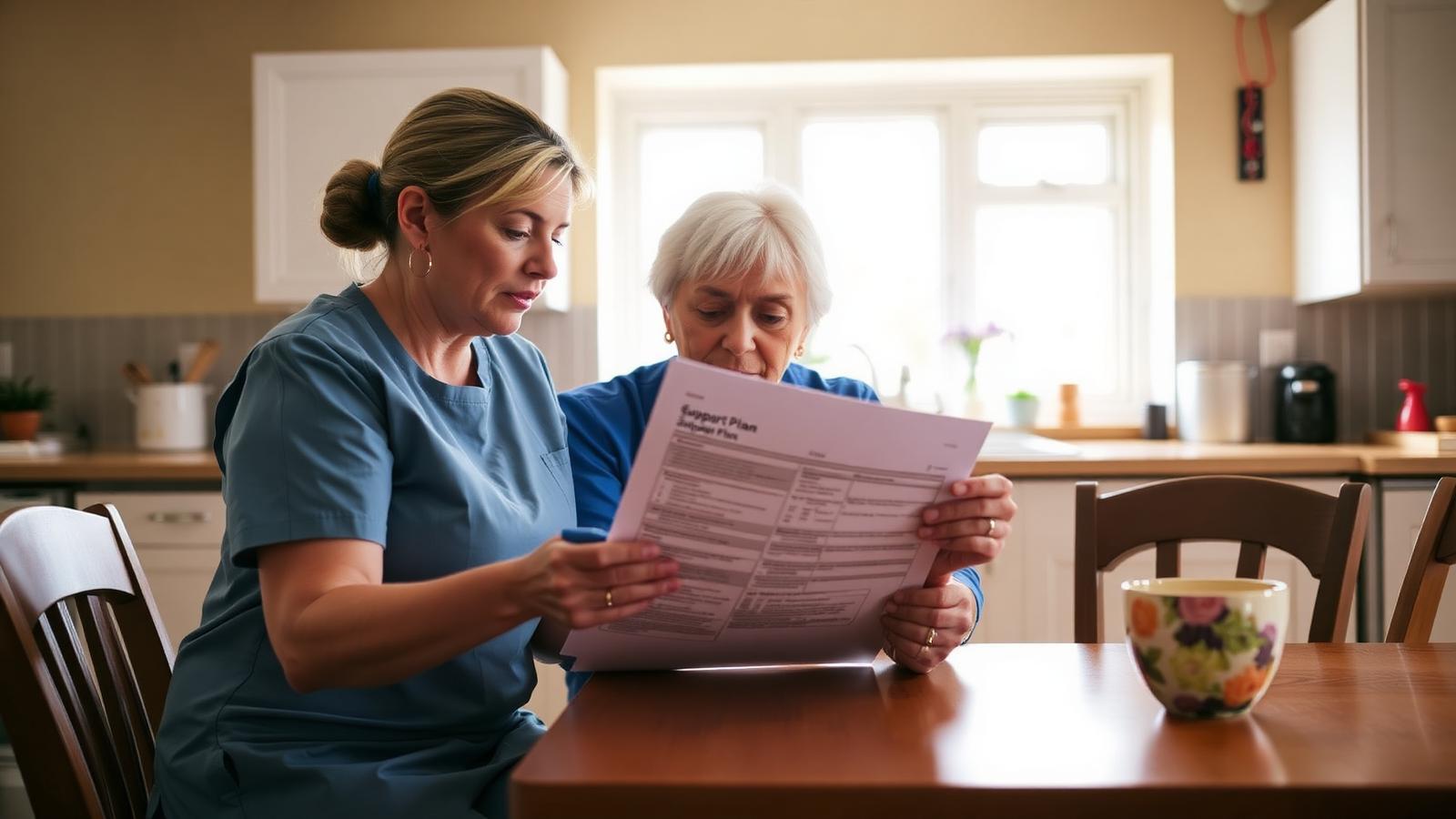

Two requirements sit close together in 245D practice and get confused constantly: the individual abuse prevention plan, and the expectations of Minnesota's Positive Support Rule. One is a person-specific vulnerability document. The other is a standard for how you respond to behavior.
Here is a working starting point for both — what belongs in the documents, and what has to be true in practice for them to hold up in a licensing review.
What the IAPP is actually for
The plan identifies the specific vulnerabilities a person has to abuse, neglect and exploitation, and states what your program does about each one. It is written for the person, from what your team knows about them.
Licensors read it against the rest of the file. Vulnerabilities that appear in the assessment or addendum but not in the IAPP are the standard finding.
Building one that works
Start from the person's actual risk picture: communication, mobility, medical, financial, social isolation, history, and any behavior that could escalate a situation.
For each vulnerability, name the measure — what staff do differently, when, and how it is verified. Measures that cannot be observed cannot be evidenced.
- Reviewed at least annually and after any incident that changes the risk picture
- Trained to every staff member who supports the person, with a dated record
- Consistent with the addendum, the assessment, and the incident history
What the Positive Support Rule changes in practice
The rule moves programs toward positive, preventive, skill-building responses and away from restrictive interventions, with specific procedures prohibited outright and tight expectations around any permitted restrictive response.
In practice this shows up in three places: how you write behavior supports, how you train staff to respond, and how you review and report anything that looks restrictive.
Prohibited procedures your staff must know by name
Staff cannot avoid a prohibited procedure they have never heard named. Orientation should cover the list explicitly, with realistic examples from your setting, not abstractions.
Pair it with a clear internal path: what to do when a situation escalates, who to call, and how it gets documented and reviewed afterward.
The documentation licensors expect to find
A current, person-specific IAPP; behavior supports written in positive, teachable terms; training records showing both were taught; incident records with internal review; and evidence that anything restrictive was reported and reviewed as required.
Programs that keep these five in one place usually get through this portion of a licensing review quickly.
Frequently asked questions
Does every person need an IAPP?
Plan on yes for the people you serve under 245D, and build it from that person's actual vulnerabilities rather than a template.
How do positive support strategies relate to the addendum?
They should appear there too. Strategies documented in one place and absent from the other is a common correction order.
What if a restrictive intervention happens?
Follow your policy for immediate reporting, internal review and required notifications, and treat it as a trigger to revisit the IAPP and the support strategies.
Related service
Staff training
This article is general information for Minnesota providers, not legal advice. Requirements change — always confirm current expectations with the Minnesota Department of Health or the Department of Human Services before acting.