
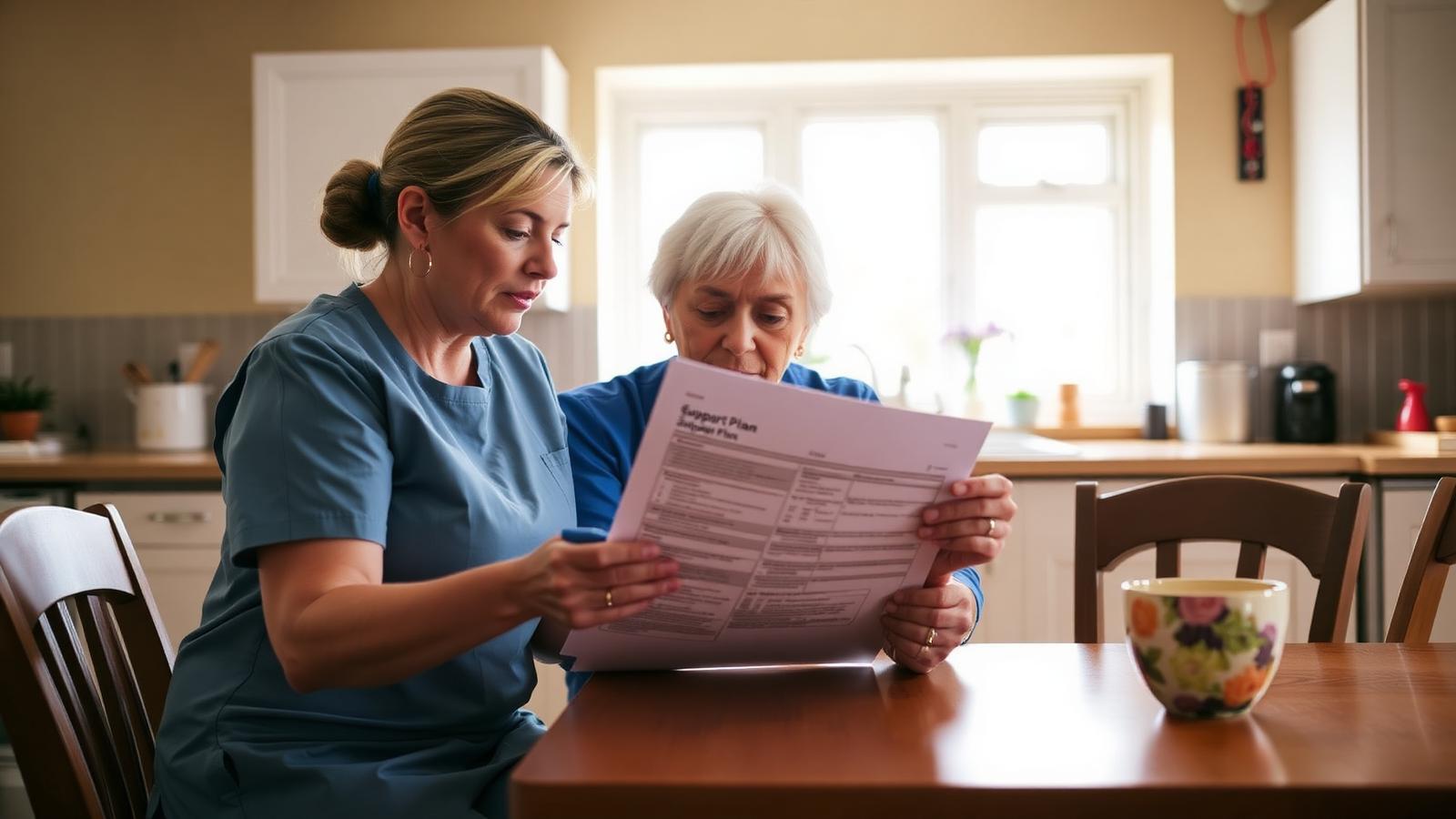
If a 245D licensing review has a center of gravity, it is the CSSP addendum. It is where the county's support plan becomes your program's commitment, and where a licensor can see, on one document, whether your program is actually doing what it said it would.
This is what they read for, in the order they usually read it.
Does the addendum trace to the current support plan?
The licensor starts by matching the addendum to the support plan in the file. Different dates, different service authorizations, or outcomes that appear in one and not the other are the first thing they will ask about.
Keep the current support plan on top of the file and note its date on the addendum, so the relationship is visible without an explanation.
Are outcomes written as something a new staff member could deliver?
'Increase independence' is not an outcome a licensor can verify. What the person is working toward, what staff do to support it, how often, and how progress gets measured — that is verifiable.
Write the method in the words your staff will use in the note. The two documents should sound like each other.
- Outcome stated in the person's own priorities where possible
- Method specific enough to train someone on
- Named staff responsibility, not 'staff will'
- Review interval stated and actually met
Do signatures and dates line up with the change history?
Licensors read date order closely. An addendum revised after a service change but signed before it, or a team signature missing entirely, undermines otherwise good content.
A one-line change log at the front of the file — what changed, when, who signed — resolves most of these questions before they get asked.
Do the daily notes evidence the addendum?
The addendum is the promise; the notes are the proof. When notes record shifts rather than outcomes, the licensor concludes the addendum is not being implemented, whatever the addendum says.
Templates that mirror the addendum's outcomes are the single highest-leverage fix we deploy in 245D programs.
Are identified risks connected to an IAPP where required?
Where the addendum names a behavior or risk, the licensor will look for the corresponding individual abuse prevention plan and, where applicable, positive support strategies.
A risk named in one document and absent from the other is a common and entirely avoidable order.
Frequently asked questions
How often should the addendum be updated?
At the required review interval and immediately on any service or support-plan change. Waiting for the annual cycle is what creates mismatches.
Can we use a template addendum?
A template structure is fine; template content is not. Licensors recognize identical language across person files quickly.
Who should sign?
Follow your policy and the requirement for your service type — but whoever signs, make sure the date follows the change it documents.
Related service
Compliance audits
This article is general information for Minnesota providers, not legal advice. Requirements change — always confirm current expectations with the Minnesota Department of Health or the Department of Human Services before acting.